
Latest AI cybersecurity news on Anthropic Mythos, Apple M5 exploit research, SonicWall SMA VPN flaws, UAE digital hygiene, and what teams should do now.
Last checked: May 20, 2026. This roundup prioritizes primary sources from Anthropic, Apple, SonicWall, Rapid7, the World Economic Forum, CISA, Group-IB and UAE-linked WAM coverage. Security advisories change quickly, so administrators should confirm current vendor guidance before making production decisions.
Quick answer
The biggest cybersecurity story right now is not one isolated hack. It is the speed shift created by AI-assisted vulnerability research.
Anthropic's restricted Claude Mythos Preview model has pushed AI cyber risk into mainstream business discussions because Anthropic says it can find and exploit high-severity vulnerabilities in major operating systems and web browsers. Soon after, researchers at Calif said Mythos helped them build a macOS kernel local privilege escalation on Apple M5 hardware in five days. Separately, SonicWall SMA 100 VPN appliances remain a reminder that edge devices and remote-access systems are still prime targets when patching or credential controls lag behind.
For security teams, the lesson is direct: patch cycles, asset inventories, VPN hardening, logging, identity controls and human approval gates for defensive AI workflows now matter more than ever. For everyday users, the practical answer is still simpler: update devices, remove unused apps and files, use MFA or passkeys, and treat polished messages as potentially unsafe until verified.
What the current headlines are missing
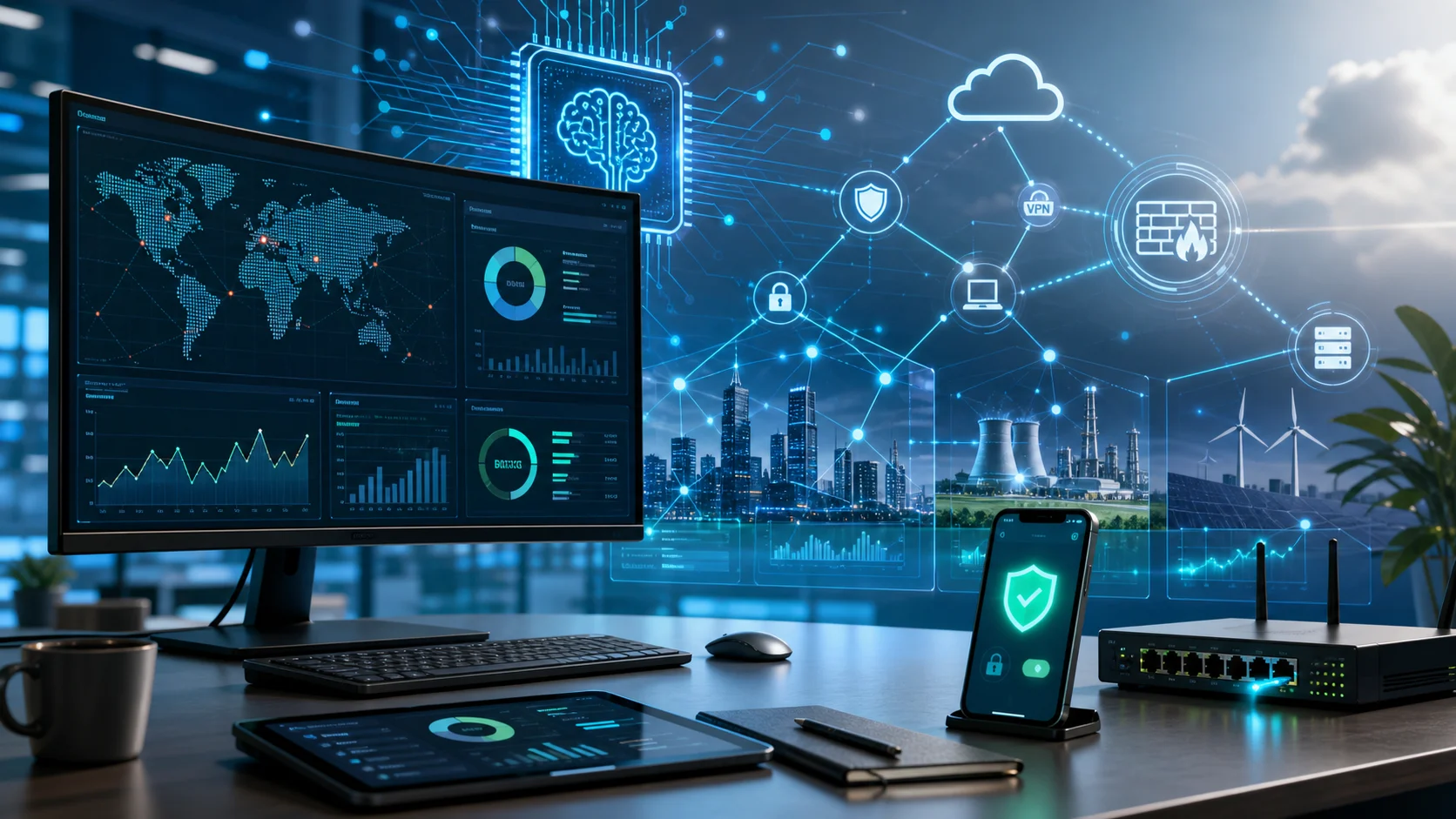
The news results around cybersecurity today are fragmented. One headline focuses on Mythos as a global AI threat. Another focuses on an Apple M5 kernel exploit. Others highlight SonicWall SSL-VPN patch risks, digital cleaning for phones and tablets, and new cybersecurity education partnerships.
Taken together, these stories point to one larger shift:
| Story | What happened | Why it matters |
|---|---|---|
| Anthropic Mythos | Anthropic restricted public access to a model it says can perform advanced vulnerability discovery and exploitation | Frontier AI can compress offensive research timelines |
| Apple M5 exploit research | Calif reportedly used Mythos Preview in a five-day macOS kernel exploit workflow against M5 hardware with Memory Integrity Enforcement enabled | Even high-end hardware mitigations need faster testing, disclosure and patch response |
| SonicWall SMA 100 flaws | Rapid7 disclosed three SonicWall SMA 100 issues that can be chained for root-level remote code execution by an authenticated SSL-VPN user | Remote access appliances remain high-value entry points |
| UAE digital cleaning advice | The UAE Cyber Security Council told WAM that regular device cleaning can reduce cyber incidents and attacks by up to 30% | Basic user behavior still closes common paths for malware and data exposure |
| Cyber talent moves | Group-IB and Coventry University Egypt signed an MoU to train students in forensics, threat hunting, incident response, OSINT and reverse engineering | The region needs more hands-on defenders, not only more tools |
The replacement angle for a stronger article is therefore not panic. It is actionable context: AI is making cyber operations faster, but organizations still lose control through old problems such as exposed appliances, stale accounts, weak patch governance, poor logs and unmaintained devices.
Anthropic Mythos is the center of the AI cyber debate
Anthropic announced Project Glasswing in April 2026 as a restricted defensive cybersecurity initiative. The launch partners named by Anthropic include Amazon Web Services, Anthropic, Apple, Broadcom, Cisco, CrowdStrike, Google, JPMorganChase, the Linux Foundation, Microsoft, NVIDIA and Palo Alto Networks.
The company says Project Glasswing exists because of capabilities it observed in Claude Mythos Preview, an unreleased frontier model. Anthropic describes Mythos as strong enough at coding, reasoning and autonomy to change how vulnerability research works. The company says it has already found thousands of high-severity vulnerabilities, including issues in major operating systems and web browsers.
Anthropic's red-team assessment is more important than the hype around it. The technical post says Mythos was able to identify and exploit zero-day vulnerabilities during controlled testing, reverse-engineer exploits on closed-source software, and turn known but not widely patched vulnerabilities into working exploits. Anthropic also says more than 99% of the vulnerabilities it found were not patched at publication time, which is why the company did not publish details.
That is the core risk: the same capability that helps defenders find flaws before criminals do can also help attackers if access controls fail, if similar models become widely available, or if less careful labs release comparable tools without guardrails.
The Apple M5 exploit claim matters, but users should not panic
The Apple-related story is serious, but it needs careful framing.
Apple introduced Memory Integrity Enforcement as a major memory-safety protection for Apple devices. Apple describes MIE as an always-on defense covering key attack surfaces including the kernel and many userland processes, built on Enhanced Memory Tagging Extension and supported by secure allocators and tag confidentiality protections.
Calif researchers reportedly used Claude Mythos Preview to help build a data-only macOS kernel local privilege escalation chain targeting macOS 26.4.1 on bare-metal Apple M5 hardware with kernel MIE enabled. Reporting from 9to5Mac says the team found initial bugs on April 25, had a working exploit by May 1, and planned to hold the full technical report until Apple shipped a fix.
The consumer takeaway is not "all Macs are broken." A local privilege escalation usually means an attacker already needs some local code execution or account foothold before the chain becomes useful. The bigger lesson is that AI can shorten the time between finding a bug class and turning it into a reliable exploit, especially when expert researchers guide the model.
For Apple users, the best response is still practical:
- Install macOS and iOS security updates quickly when Apple releases them.
- Avoid running unknown apps, cracked software, unsigned tools or scripts from untrusted sources.
- Keep Lockdown Mode in mind for journalists, activists, executives and other high-risk users.
- Use separate standard and admin accounts where practical.
- Keep reliable backups so recovery does not depend on a compromised machine.
For enterprises managing Mac fleets, this is also a reminder to track endpoint update compliance, restrict local admin rights, monitor unusual privilege escalation behavior and treat macOS telemetry as a first-class SOC signal.
SonicWall SMA VPN flaws show why edge devices stay dangerous
The SonicWall story is less futuristic than Mythos, but it is exactly the kind of risk criminals keep exploiting.
Rapid7 disclosed three vulnerabilities affecting SonicWall Secure Mobile Access 100 series appliances: CVE-2025-32819, CVE-2025-32820 and CVE-2025-32821. Rapid7 says an attacker with access to an SMA SSL-VPN user account can chain the flaws to make a sensitive system directory writable, escalate to administrator privileges and write an executable file to a system directory. The resulting chain can lead to root-level remote code execution.
SonicWall fixed the issues in SMA 100 version 10.2.1.15-81sv, according to Rapid7's disclosure and SonicWall's advisory link. Rapid7 also notes that CVE-2025-32819 appears to be a patch bypass for an earlier arbitrary file delete issue and says it believes the vulnerability may have been used in the wild based on private indicators and incident response work.
That makes this more than a patch note. SSL-VPN and remote-access appliances often sit at the perimeter, expose login surfaces to the internet and carry trusted access into internal networks. If an attacker gets a valid low-privilege VPN account through phishing, credential stuffing, password reuse or infostealer malware, appliance flaws can turn that account into deeper compromise.
Administrators should prioritize:
- Confirming whether any SMA 100 appliances are still exposed and what firmware version they run.
- Upgrading affected appliances to vendor-fixed versions.
- Reviewing VPN logs for suspicious low-privilege account activity, file operations and admin changes.
- Rotating passwords, revoking stale sessions and enforcing MFA.
- Limiting VPN access by group, geography, device posture and business need.
- Removing unsupported end-of-life remote-access appliances from production.
The larger point is that AI may accelerate vulnerability research, but attackers still love ordinary internet-facing appliances with old firmware and weak identity controls.
Digital cleaning is not cosmetic security
The device-cleaning headlines sound basic, but they are useful for everyday readers. UAE Cyber Security Council statements carried by WAM-linked coverage said periodic inspection and digital cleaning of mobile phones, tablets and computers can help reduce cyber incidents and attacks by up to 30%.
The idea is simple. Unused apps, old files, cached downloads, outdated software, neglected permissions and full storage make devices harder to maintain and easier to misuse. They also hide malicious files and keep forgotten apps connected to accounts, contacts, photos, microphone, camera, location and cloud storage.
A sensible digital cleaning routine includes:
- Delete apps you no longer use, especially apps outside official stores.
- Remove old downloads, APK files, installers, screenshots of IDs and exported documents.
- Update the operating system, browser and messaging apps.
- Review camera, microphone, contacts, location, photos and notification permissions.
- Remove unknown browser extensions and device profiles.
- Run security scans from trusted tools, not pop-up ads.
- Back up important files before deleting anything permanently.
This will not stop a nation-state exploit chain, but most users are not targeted that way. Most users are exposed through phishing, old apps, malicious downloads, reused passwords, weak recovery settings and overshared permissions. Digital cleaning reduces that everyday attack surface.
AI defense needs governance, not blind autonomy
The World Economic Forum's 2026 AI cybersecurity work is useful because it avoids a simple "AI good" or "AI bad" story. Its WEF-KPMG report says AI is transforming security operations, but organizations need strategic deployment, governance and balanced human oversight.
That is the right framing. AI can help defenders triage alerts, cluster vulnerabilities, summarize logs, draft incident timelines, explain suspicious code, map exposed assets and recommend remediation. It can also make mistakes, overfit to bad data, miss local context or take actions too quickly.
The strongest security programs will use AI where speed and scale help, while keeping human approval for high-impact steps.
| Defensive task | AI can help with | Human control should remain over |
|---|---|---|
| Vulnerability management | Prioritizing internet-facing, exploitable and business-critical issues | Accepting risk, delaying patches or changing production systems |
| SOC triage | Grouping alerts, summarizing evidence and drafting investigation notes | Declaring incidents, containment and legal or customer notifications |
| Secure coding | Explaining vulnerable code and proposing fixes | Merging code, changing authentication logic and releasing builds |
| Identity security | Detecting abnormal access and stale privileges | Disabling executive, admin or production service accounts |
| Incident response | Building timelines and suggesting next steps | Network isolation, data deletion and public communications |
In short, machine-speed analysis is valuable. Machine-speed irreversible action is risky without guardrails.
What businesses should do this week
The best response to this news cycle is not a new slogan. It is a shorter list of things that actually reduce risk.
Start with the assets attackers can reach from the internet: VPNs, firewalls, identity portals, remote desktop gateways, admin panels, file-transfer servers, SaaS integrations and exposed APIs. These systems should have named owners, current firmware, logs, MFA, backup access procedures and clear emergency patch windows.
Then review vulnerability aging. A 90-day patch target may be too slow for internet-facing systems when exploit development can be compressed by AI. High-risk flaws on perimeter devices, identity systems and widely deployed libraries need separate urgency from ordinary internal bugs.
Next, test incident response assumptions. Can your team revoke sessions quickly? Can you rotate VPN credentials without breaking operations? Do you have logs from edge appliances? Can you isolate a compromised endpoint without losing evidence? Can legal, communications and leadership make decisions under pressure?
Finally, treat AI security tools as controlled systems. Give them scoped access, log their actions, require approvals for dangerous changes and test outputs before trusting them in production.
What everyday users should do now
If you are not running corporate infrastructure, focus on the steps that block the most common attacks.
Update your phone, computer, browser and messaging apps. Turn on automatic updates where you trust the vendor. Delete apps you do not use. Remove old files that contain IDs, passwords, bank details, school records or work documents. Use passkeys or MFA on email, banking, cloud storage and social accounts. Do not share one-time codes with anyone, including people claiming to be support staff.
Be more skeptical of polished messages. AI has made scam emails, fake invoices, fake job offers, fake delivery notices and fake support chats look cleaner. Bad spelling is no longer a reliable warning sign. Verify urgent requests through a separate trusted channel before clicking, paying or sharing data.
Related videos and official briefings
Use these official video and briefing pages for safer follow-up learning:
- CISA Secure Our World videos: cisa.gov/secure-our-world/videos
- World Economic Forum: 3 trends redefining cyber risk in 2026: weforum.org/videos/3-trends-redefining-cyber-risk-in-2026
- World Economic Forum: Cybersecurity experts explain the global threat landscape: weforum.org/videos/cybersecurity
- World Economic Forum: Why cybersecurity needs diverse thinkers: weforum.org/videos/cybersecuritysnippets-wendi-whitmore
- World Economic Forum report page: Empowering Defenders: AI for Cybersecurity: weforum.org/publications/empowering-defenders-ai-for-cybersecurity
FAQ
What is Claude Mythos Preview?
Claude Mythos Preview is an unreleased Anthropic frontier model being used in a restricted defensive cybersecurity program called Project Glasswing. Anthropic says it has advanced vulnerability discovery and exploitation capabilities, so it has not been released publicly.
Is the Apple M5 exploit an active attack against users?
Public reporting describes it as security research, not a broad active attack campaign against Apple users. It is still important because it shows how quickly expert researchers plus advanced AI can test even strong hardware-backed mitigations.
What should SonicWall SMA administrators patch?
Administrators should review SonicWall SMA 100 exposure and update affected appliances to the fixed firmware identified in SonicWall's advisory and Rapid7's disclosure, including version 10.2.1.15-81sv for the 2025 SMA 100 issues discussed here.
Does deleting unused files really improve cybersecurity?
It can help. Deleting unused apps and risky files reduces malware hiding places, cuts unnecessary permissions, improves update hygiene and lowers the chance that old sensitive documents are exposed if a device or account is compromised.
Should companies let AI security tools take action automatically?
Companies should start with AI-assisted analysis and low-risk automation. High-impact actions such as disabling accounts, isolating production systems, changing firewall rules, deleting data or releasing patches should keep human approval, logging and rollback controls.
Sources
- Anthropic Project Glasswing: anthropic.com/glasswing
- Anthropic red-team assessment of Claude Mythos Preview: red.anthropic.com/2026/mythos-preview
- Apple Security Research on Memory Integrity Enforcement: security.apple.com/blog/memory-integrity-enforcement
- 9to5Mac coverage of Calif's Mythos-assisted Apple M5 research: 9to5mac.com
- World Economic Forum cybersecurity news roundup: weforum.org
- World Economic Forum and KPMG report, Empowering Defenders: AI for Cybersecurity: weforum.org/publications
- Rapid7 disclosure syndicated by Noise: noise.getoto.net
- SonicWall PSIRT advisory SNWLID-2025-0011: psirt.global.sonicwall.com
- UAE Cyber Security Council digital cleaning guidance carried from WAM: pakistanpoint.com
- Group-IB and Coventry University Egypt partnership: group-ib.com
- CISA Secure Our World videos: cisa.gov
Before you move on
Defensive security explainers. Use this short checklist to turn the article into action.
- Change reused passwords on important accounts.
- Enable multi-factor authentication or passkeys where available.
- Keep a separate backup for files you cannot afford to lose.
This guide is written for practical user safety. For account, platform, or legal decisions, confirm critical steps with the official help center or your service provider.