

AI search is changing organic SEO, but not killing it. Learn how helpful content, entities, structured data, authority and brand trust now work together.
Last checked: May 31, 2026. This guide uses Google Search Central guidance on helpful content, AI features, structured data, crawlability and spam policies. Search features vary by country, query and device.
Quick answer
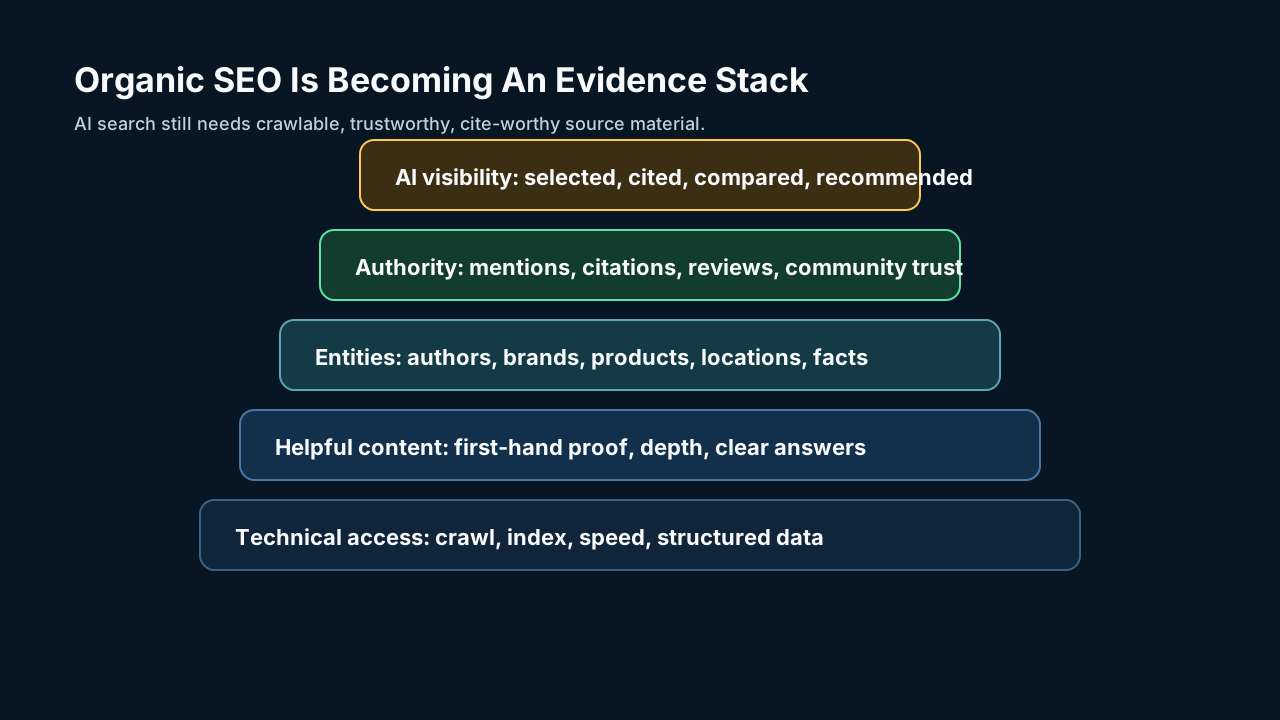
Organic SEO is shifting from "rank one blue link" to "be a trusted source across search experiences." AI Overviews, AI Mode-style answers, rich results and classic search all need the same foundation: crawlable pages, clear entities, original expertise, useful answers, structured data and strong reputation signals.
AI search does not make SEO irrelevant. It raises the bar. Thin content written only to capture keywords is weaker. Clear, accurate, experience-backed content is stronger.

What changed
Search engines now summarize, compare and answer more directly. That means some informational clicks may decline, but trusted brands can gain visibility when their content is cited, recommended or used as source material.
The shift:
| Old SEO habit | 2026 SEO replacement |
|---|---|
| Write one post per keyword variation | Build one strong page that answers the full intent |
| Chase word count | Prove expertise and usefulness |
| Add generic AI content | Add original experience, data and examples |
| Focus only on ranking position | Track citations, mentions, leads and branded demand |
| Ignore entity clarity | Make authors, products, locations and facts explicit |
What still matters
The basics still matter because AI features need source material.
Keep investing in:
- Crawlable links and clean site architecture.
- Fast, mobile-friendly pages.
- Descriptive titles and headings.
- Helpful, reliable, people-first content.
- Author and organization information.
- Product, local business, article, FAQ and review structured data where appropriate.
- Original images, examples, data and expert commentary.
- Internal links that help users understand topics.
- External reputation: mentions, citations, reviews and partnerships.
How to create content that survives AI search
Use this process:
- Identify the user's real problem.
- Answer the short question quickly.
- Add depth for people who need detail.
- Show first-hand proof: screenshots, examples, data, photos, tests or expert notes.
- Cite authoritative sources.
- Add schema where it matches the content.
- Update the page when facts change.
- Connect the page to related topic pages.
AI search systems are more likely to use content that is clear, specific and trustworthy.
What to stop doing
Avoid:
- Publishing AI rewrites of pages that already exist everywhere.
- Hiding weak content behind inflated word count.
- Buying links to manipulate rankings.
- Making claims without evidence.
- Creating location pages with no real local value.
- Letting old content rot after facts change.
- Optimizing only for traffic while ignoring conversions.
What to measure now
Traffic alone is not enough.
Track:
- Organic clicks and impressions.
- Brand searches.
- Leads, calls, signups or sales from organic pages.
- Featured snippets and rich results.
- AI answer citations where visible.
- Referral traffic from search surfaces.
- Backlinks and unlinked mentions.
- Content update velocity.
- Query coverage by buyer journey stage.
Bottom line
Organic SEO is not disappearing. It is becoming harder to fake. In the AI search era, the strongest pages are not just keyword-targeted. They are useful, verifiable, well-structured and trusted enough for humans and machines to rely on.
Sources
- Google Search Central AI optimization guide: developers.google.com
- Google helpful content guidance: developers.google.com
- Google SEO starter guide: developers.google.com
- Google structured data introduction: developers.google.com
- Google link spam policies: developers.google.com
Before you move on
Global AI workflow guidance. Use this short checklist to turn the article into action.
- Check whether the tool can access private files or account data.
- Verify factual claims against primary sources before publishing.
- Keep a human review step for work that affects money, school, or customers.
This guide is written for practical user safety. For account, platform, or legal decisions, confirm critical steps with the official help center or your service provider.