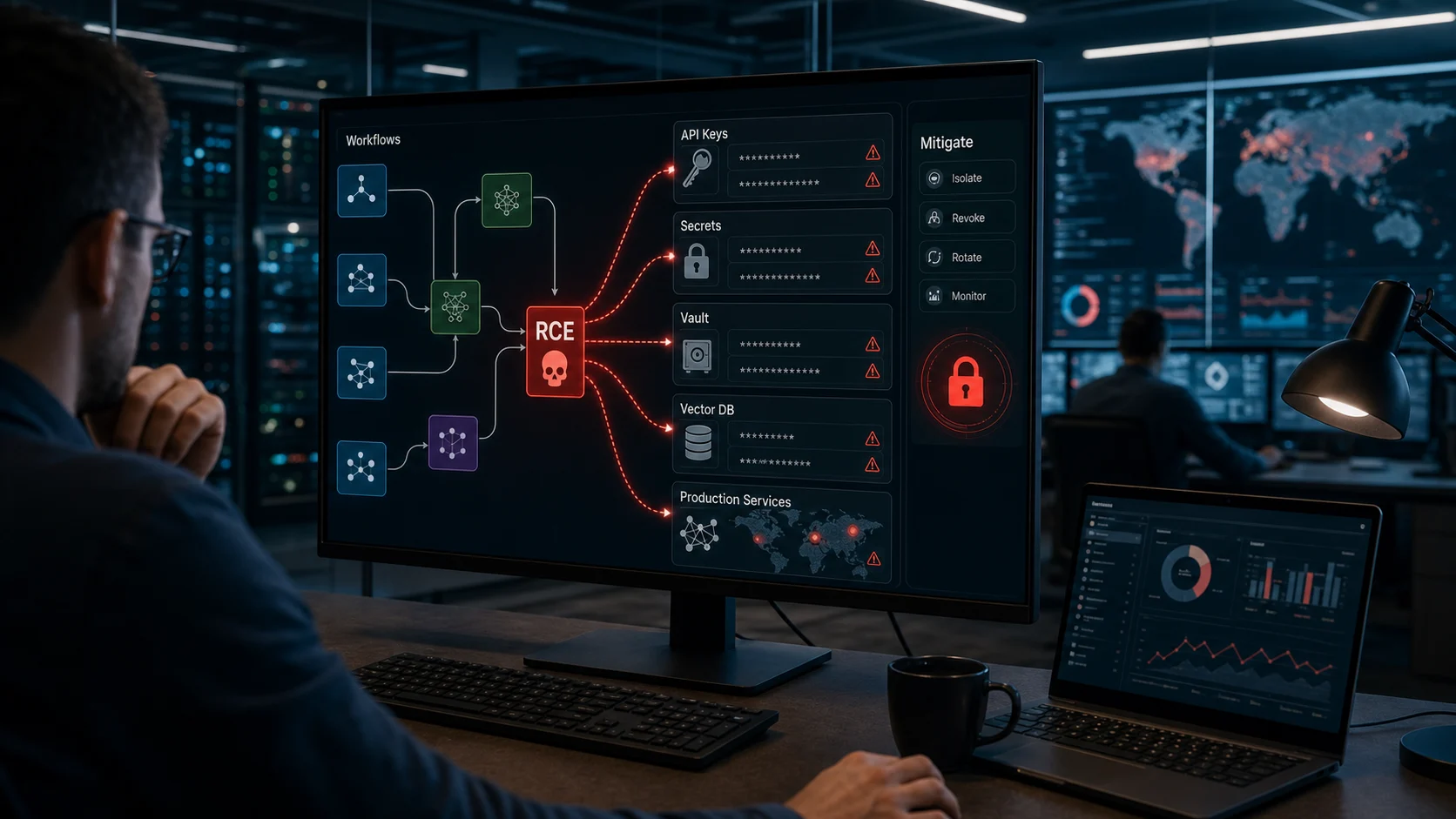


EY is positioning its Agentic SOC, powered by CrowdStrike, as a managed security operations model for faster AI-driven detection and response. Here is what is confirmed, what buyers should ask, and why human oversight still matters.
Last checked: June 1, 2026. This article uses EY's official Agentic SOC service page and EY's March 17, 2026 announcement with CrowdStrike as primary sources. It cross-checks the security operations context against CrowdStrike's 2026 Global Threat Report, CISA's AI roadmap, NIST incident-response guidance and the NIST AI Risk Management Framework.
Quick answer
EY is marketing an "Agentic SOC, powered by CrowdStrike" as a managed security operations model that uses AI agents, analytics and automated workflows to help security teams detect and respond to threats faster.
The core news is not simply that EY has another managed security service. The shift is that EY and CrowdStrike are positioning the SOC as a multi-agent operating model: AI agents help reason over telemetry, prioritize alerts, orchestrate workflows and accelerate response, while human analysts keep judgment and control.
EY's official service page says the offering is aimed at organizations facing machine-speed attacks, legacy SOC constraints and security talent pressure. EY's March 17 announcement says CrowdStrike Falcon powers the service, with NVIDIA AI infrastructure and NVIDIA AI Enterprise software accelerating the stack.
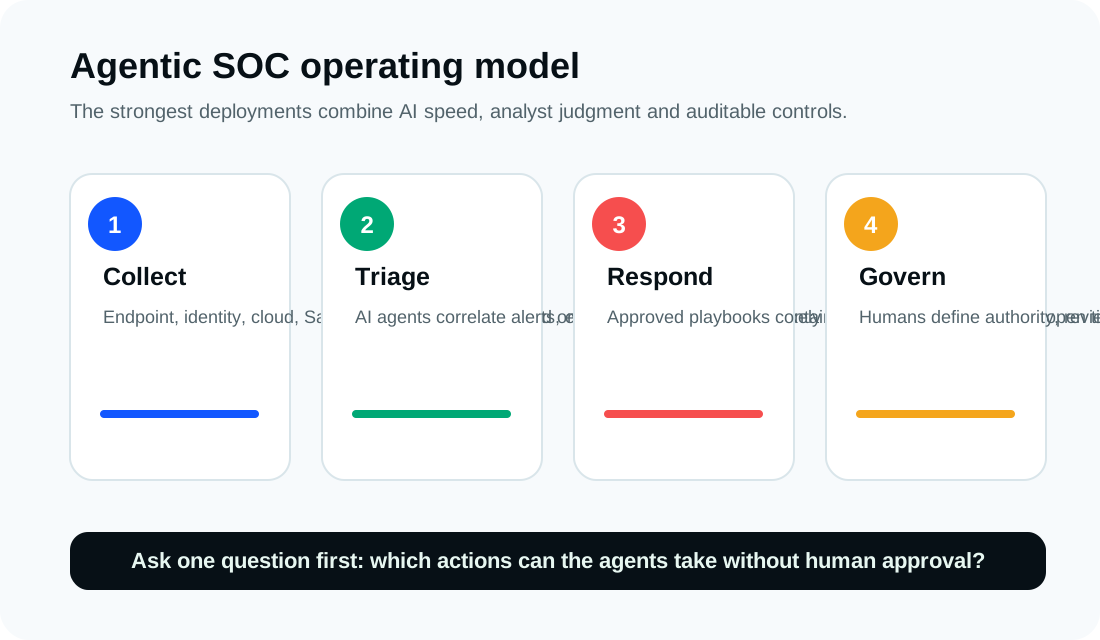
For CISOs, the useful question is not "Should AI be in the SOC?" It already is. The harder question is: which actions can AI agents take, what requires human approval, and how will the organization audit every decision afterward?
What EY has announced
EY's service page describes the offering as "EY Agentic SOC, powered by CrowdStrike." The page frames it around "agentic threat detection plus human intervention" and says the goal is faster detection and better defense against AI-accelerated cybersecurity threats.
EY's March 17, 2026 press release says Ernst & Young LLP selected the CrowdStrike Falcon platform to power its Agentic SOC services, accelerated by NVIDIA AI infrastructure and NVIDIA AI Enterprise software.
The release names four CrowdStrike capabilities as part of the stack:
- Agentic Security Platform.
- Agentic Security Workforce.
- Charlotte AI AgentWorks.
- Charlotte Agentic SOAR.
EY says the service combines EY managed-services experience with CrowdStrike's AI-native security platform and agents. CrowdStrike says the operating model moves defenders from alert handlers toward orchestrators of intelligent agents.
Why this matters now
Traditional SOCs were built around human analysts, queues, SIEM alerts, tickets, manual triage and playbooks. That model is under pressure for three reasons.
First, attackers are moving faster. CrowdStrike's 2026 Global Threat Report executive summary says the fastest eCrime breakout time on record was 27 seconds, and that AI-enabled adversary activity increased 89%.
Second, identity, cloud, SaaS and endpoint telemetry have become too broad for manual triage alone. A single incident can include endpoint detections, identity events, OAuth grants, cloud permissions, network flows, mailbox rules, file activity and vulnerability context.
Third, security teams are short on capacity. EY's page explicitly points to the talent scarcity problem and says humans must remain a crucial part of defense.
Agentic SOCs are a vendor answer to that pressure: use agents for speed and correlation, but keep human analysts for judgment, exception handling, approvals and accountability.
What "agentic SOC" means in plain English
An agentic SOC is a security operations environment where AI agents do more than summarize alerts. They can be assigned tasks, use tools, query systems, enrich findings, recommend actions and sometimes execute approved playbooks.
In a mature deployment, agents may help with:
| SOC task | What an AI agent may do |
|---|---|
| Alert triage | Group related alerts, suppress duplicates and identify likely incidents. |
| Investigation | Query endpoint, identity, cloud and network data for context. |
| Threat hunting | Search for indicators, suspicious sequences or known attacker behavior. |
| Response | Recommend or run approved actions such as isolating a host or disabling a token. |
| Reporting | Draft timelines, incident notes, executive summaries and handoff tickets. |
| Learning loop | Update detections, workflows and playbooks from prior incidents. |
That does not mean the AI should have unlimited authority. Strong agentic security operations define boundaries before the first incident.
What buyers should ask EY, CrowdStrike or any SOC vendor
The term "agentic" can sound impressive while hiding operational details. Security leaders should ask direct questions before adopting any AI-driven SOC model.
| Question | Why it matters |
|---|---|
| What systems can the agents access? | Agent permissions can become a new attack surface. |
| Which actions are fully automated? | Containment, account disablement and firewall changes can affect business operations. |
| Which actions require human approval? | Human-in-the-loop should be specific, not a slogan. |
| How are agent decisions logged? | Incident review, audit and regulatory reporting need evidence. |
| What data trains or tunes the agents? | Sensitive telemetry and customer data require governance. |
| How are false positives measured? | Fast response can create fast disruption if detection quality is weak. |
| How are prompts, tools and playbooks protected? | Prompt injection and tool misuse are real risks in agentic systems. |
| Can the service integrate with existing SIEM, SOAR and ticketing? | Most enterprises cannot rip and replace overnight. |
| What is the rollback process? | Automated action needs safe reversal paths. |
| What happens during a major outage? | The SOC cannot depend on a single fragile automation layer. |
The human oversight issue
EY's own positioning emphasizes human intervention and human judgment. That is important because the highest-risk SOC actions are not just technical. They can affect production systems, employee accounts, customer access, legal evidence and regulatory reporting.
Human analysts should own decisions such as:
- Declaring a major incident.
- Shutting down production systems.
- Blocking business-critical accounts.
- Notifying regulators, customers or executives.
- Preserving forensic evidence.
- Reimaging hosts.
- Approving law-enforcement escalation.
AI agents can make analysts faster, but they should not silently become the incident commander.
NIST's incident-response guidance still centers on preparation, detection and analysis, containment, eradication, recovery and post-incident activity. AI can accelerate parts of that lifecycle, but it does not remove the need for accountable roles, evidence handling and lessons learned.
Why NVIDIA appears in the stack
EY's March announcement says the service is accelerated by NVIDIA AI infrastructure and NVIDIA AI Enterprise software. The release specifically references NVIDIA Nemotron, NeMo Data Designer and NIM microservices.
For non-technical buyers, that means the offering is not only a dashboard integration. It depends on AI infrastructure for model operation, inference and enterprise deployment.
That brings additional evaluation questions:
- Where does sensitive telemetry go for inference?
- Are models hosted by the customer, EY, CrowdStrike, NVIDIA-backed infrastructure or another environment?
- What logs are retained?
- Can customer data be used for model improvement?
- How are model outputs tested before response actions are trusted?
- What happens if the AI service is degraded or unavailable?
What this means for existing SOC teams
Agentic SOC does not automatically make existing SOC teams obsolete. In practice, it changes the work mix.
Analysts may spend less time on repetitive alert enrichment and more time on:
- Validating high-risk agent recommendations.
- Building and tuning playbooks.
- Reviewing agent mistakes.
- Threat hunting across business context.
- Incident command.
- Adversary emulation and detection engineering.
- Risk communication to leadership.
That is a higher-skill model, but only if organizations invest in training. Without training, teams may either overtrust the agents or ignore them.
Benefits and risks
| Potential benefit | Risk to manage |
|---|---|
| Faster triage and response | Fast incorrect containment can disrupt business. |
| Better alert correlation | Poor data quality can lead to confident but wrong conclusions. |
| Reduced analyst fatigue | Analysts may lose hands-on investigation skills if over-automated. |
| More consistent playbooks | Attackers may learn predictable automated response patterns. |
| Managed-service scalability | Outsourcing can blur ownership during incidents. |
| AI-assisted reporting | Reports may include unsupported conclusions if not reviewed. |
The best case is a SOC where AI handles repetitive work and humans make better decisions faster. The worst case is an automated system that acts quickly without enough evidence or governance.
How leaders should prepare before adoption
Before buying or expanding an agentic SOC service, leaders should do the groundwork.
- Map existing telemetry.
Know what endpoint, identity, cloud, email, SaaS, network and vulnerability signals are available. AI cannot reason well over data it cannot see.
- Define response authority.
Write down which actions are allowed automatically, which need analyst approval, which need incident commander approval and which need executive approval.
- Create test incidents.
Use tabletop exercises and simulated detections to see how the system behaves before a real ransomware, credential theft or cloud compromise event.
- Audit data handling.
Check data residency, retention, privacy, model training, customer-data reuse and vendor access.
- Review legal and regulatory duties.
Industries such as finance, health, energy and government contracting may have special reporting, logging and third-party risk requirements.
- Train analysts.
Make analysts AI supervisors, not passive dashboard watchers. They need to understand prompts, tool permissions, evidence quality and escalation paths.
What remains unclear
Several practical details are not fully answered by the public EY service page:
- Pricing and packaging.
- Exact customer deployment model.
- Which response actions are automated by default.
- Whether customer telemetry can be used to improve models.
- How agent performance is measured over time.
- How independent audit or red-team testing works.
- How the service handles model failure, hallucinated reasoning or prompt injection.
Those are normal open questions for a managed service page, but they matter before procurement.
Bottom line
EY Agentic SOC reflects where enterprise security operations are heading: faster, more automated and more AI-assisted. The timing makes sense. Attackers are moving faster, alert volumes are rising and human-only triage is struggling.
But "agentic" should not mean uncontrolled. A good AI-driven SOC needs clear authority boundaries, strong logging, model governance, human review and tested response playbooks.
For CISOs, the right benchmark is not whether the SOC sounds advanced. It is whether it can prove faster detection, safer response and better accountability during a real incident.
Sources
- EY: EY Agentic SOC: AI-driven cybersecurity and security operations.
- EY: EY Selects CrowdStrike to Power Its Agentic SOC Services, Accelerated by NVIDIA AI, March 17, 2026.
- CrowdStrike: 2026 Global Threat Report executive summary.
- CrowdStrike: 2026 Global Threat Report findings.
- CISA: Roadmap for Artificial Intelligence.
- NIST: Computer Security Incident Handling Guide, SP 800-61 Rev. 2.
- NIST: AI Risk Management Framework.
Before you move on
Defensive security explainers. Use this short checklist to turn the article into action.
- Change reused passwords on important accounts.
- Enable multi-factor authentication or passkeys where available.
- Keep a separate backup for files you cannot afford to lose.
This guide is written for practical user safety. For account, platform, or legal decisions, confirm critical steps with the official help center or your service provider.