
IBM and Red Hat's Project Lightwell is a multi-year $5 billion push to harden open-source software in the AI era. Here is what it means for developers, businesses and security teams.
Last checked: May 31, 2026. IBM and Red Hat announced Project Lightwell on May 28, 2026. The core verified claim is a multi-year $5 billion commitment to open-source innovation and security in the AI era. This article explains the impact without treating the announcement as a guarantee that open-source supply-chain risk disappears.
Quick answer
IBM and Red Hat say they will commit $5 billion over several years to Project Lightwell, a new push to strengthen open-source software for the AI era. The announcement matters because open-source packages are now part of nearly every cloud service, AI application, container image, developer tool and enterprise workflow.
The timing is not accidental. AI can help defenders find vulnerabilities faster, but it also helps attackers scan repositories, spot unsafe dependency chains and generate exploit attempts at scale. The real bottleneck is no longer only discovery. It is turning discovery into prioritized fixes that maintainers and businesses can actually deploy.
For users, the practical takeaway is simple: keep using open source, but do not assume "popular" means "secure." Businesses should maintain software bills of materials, monitor critical dependencies, patch faster, fund or support maintainers where possible and reduce reliance on unmaintained packages.
What IBM announced
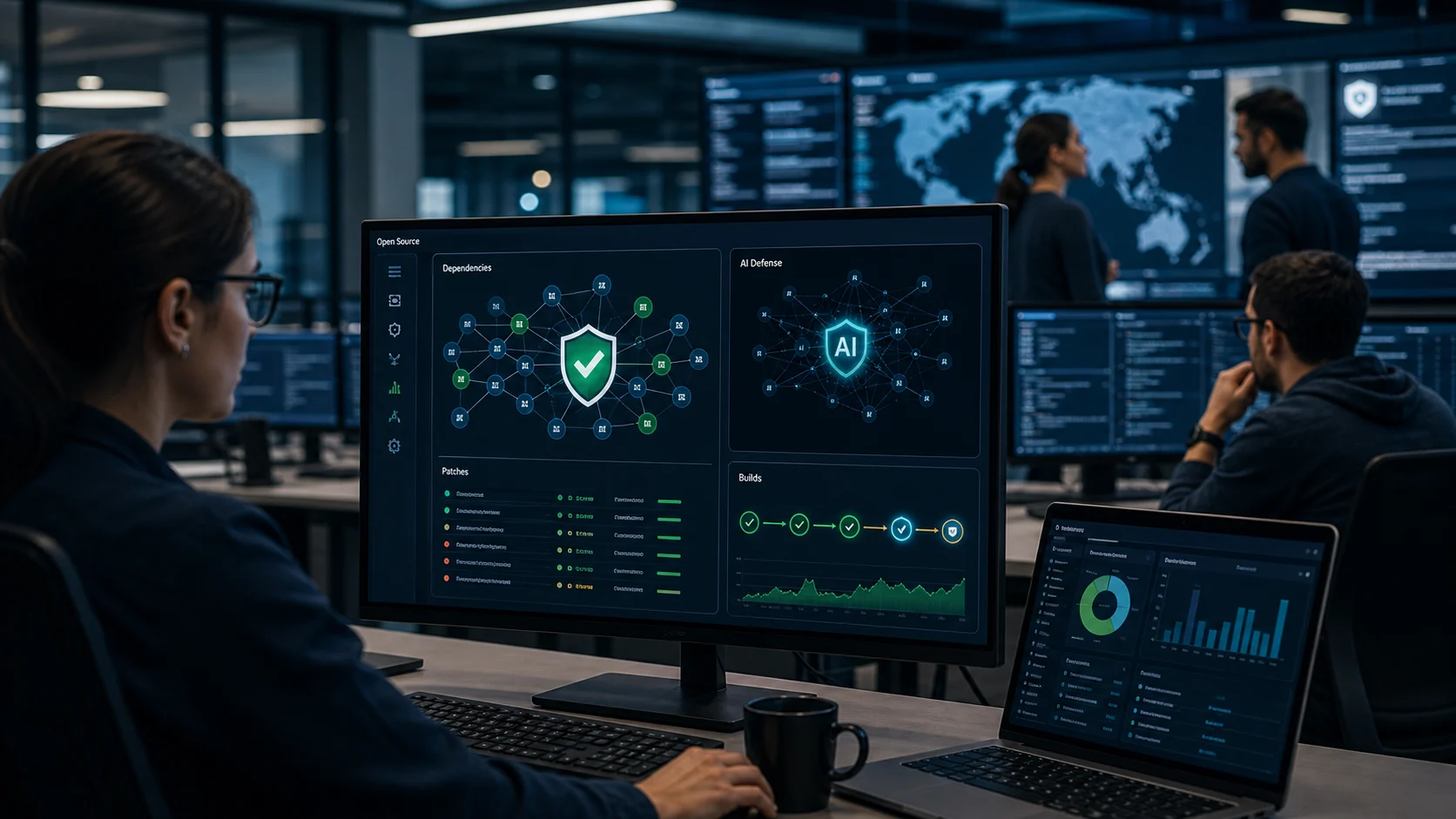
IBM and Red Hat framed Project Lightwell as a major open-source investment focused on the next phase of AI-driven software development and security. The company says the program will involve engineering, research, ecosystem support and tools that help secure the open-source stack businesses depend on.
The important part is the direction: enterprise vendors are acknowledging that AI security is not only about protecting models. It is also about protecting the code, libraries, build systems and maintainers underneath AI products.
Open-source software is everywhere:
- Operating systems and containers.
- Kubernetes and cloud infrastructure.
- Python, JavaScript, Java and Go libraries.
- Model-serving frameworks.
- Data and vector database clients.
- Developer tools and CI/CD pipelines.
- Security scanners and observability systems.
If a widely used package is compromised or a critical bug is found, the impact can spread far beyond one project.
Why open source is the AI-era attack surface
Attackers target open source because it offers scale. A single dependency can sit inside thousands of apps, containers and services.
AI makes that target more attractive because it can help threat actors:
- Search large codebases for risky patterns.
- Generate proof-of-concept exploit logic faster.
- Build convincing maintainer impersonation messages.
- Find abandoned packages with high downstream use.
- Identify projects with weak release signing or CI controls.
- Automate dependency confusion and typosquatting attempts.
Defenders get the same acceleration. AI can help review code, cluster vulnerability reports, summarize patches, generate regression tests and prioritize reachability. The challenge is governance: automated findings are only useful if teams can validate and patch them safely.
What businesses should do now
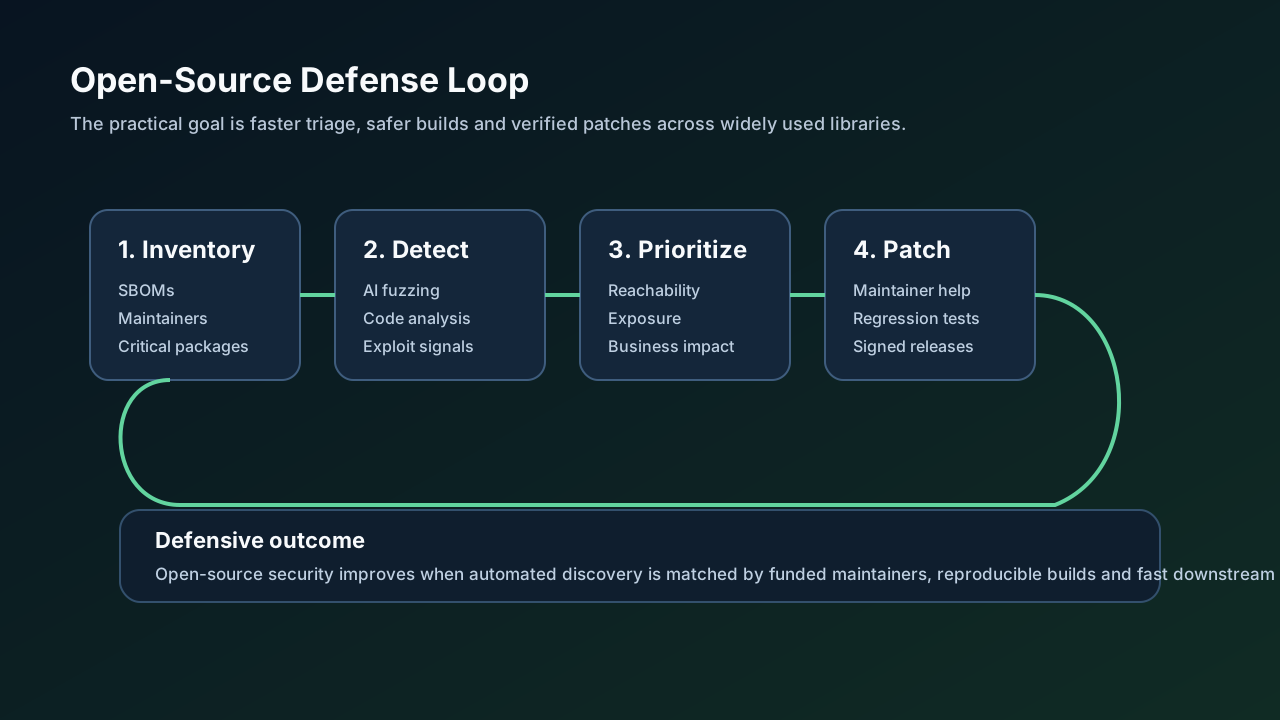
Project Lightwell may improve the ecosystem over time, but every company still owns its own dependency risk.
Start with these steps:
- Generate and maintain a software bill of materials for production systems.
- Identify which open-source packages are internet-facing, privileged or business-critical.
- Track direct and transitive dependencies, not only the packages your developers import manually.
- Remove abandoned packages where maintained alternatives exist.
- Turn on dependency alerts in your source-control and package-management systems.
- Patch critical reachable vulnerabilities quickly instead of waiting for quarterly maintenance.
- Require code review and CI checks for dependency updates.
- Use signed releases and verified build provenance where available.
- Separate production secrets from build systems and developer laptops.
- Support critical maintainers through sponsorship, commercial support or direct contribution.
The best supply-chain security programs treat open source as infrastructure, not as free background material.
What developers should watch
Developers should expect more AI-assisted security tooling, but they should also expect more noise. Not every AI-found issue is exploitable, and not every scanner result deserves the same urgency.
Useful questions:
| Question | Why it matters |
|---|---|
| Is the vulnerable function reachable in our app? | Reachable bugs need faster action |
| Is the package internet-facing or privileged? | Exposure changes severity |
| Is there a maintained fix? | Some updates require migration planning |
| Does the patch break APIs? | Security fixes still need tests |
| Are we using the package directly or transitively? | Ownership may sit several layers down |
The goal is not blind patching. The goal is fast, evidence-based patching.
What users should know
Most everyday users will never install an open-source package directly. They still benefit when the ecosystem gets safer because their banking apps, work tools, phones, cloud accounts and websites often depend on open-source components.
Users should care when a company says a major open-source vulnerability affected its service. Good incident communication should explain what data was exposed, what has been patched, whether passwords or tokens need rotation and what users should do next.
Bottom line
IBM and Red Hat's $5 billion Project Lightwell commitment is a sign that open-source security is becoming a board-level AI issue. The investment could help maintainers and enterprises build stronger defenses, but it does not remove the need for disciplined dependency management.
Open source remains one of technology's greatest strengths. In the AI era, it also needs funding, maintainers, patch velocity and supply-chain controls that match its importance.
Sources
- IBM Newsroom, Project Lightwell announcement: newsroom.ibm.com
- IBM supply-chain security overview: ibm.com
- CISA Secure by Design guidance: cisa.gov
- OpenSSF supply-chain security resources: openssf.org
Before you move on
Defensive security explainers. Use this short checklist to turn the article into action.
- Change reused passwords on important accounts.
- Enable multi-factor authentication or passkeys where available.
- Keep a separate backup for files you cannot afford to lose.
This guide is written for practical user safety. For account, platform, or legal decisions, confirm critical steps with the official help center or your service provider.