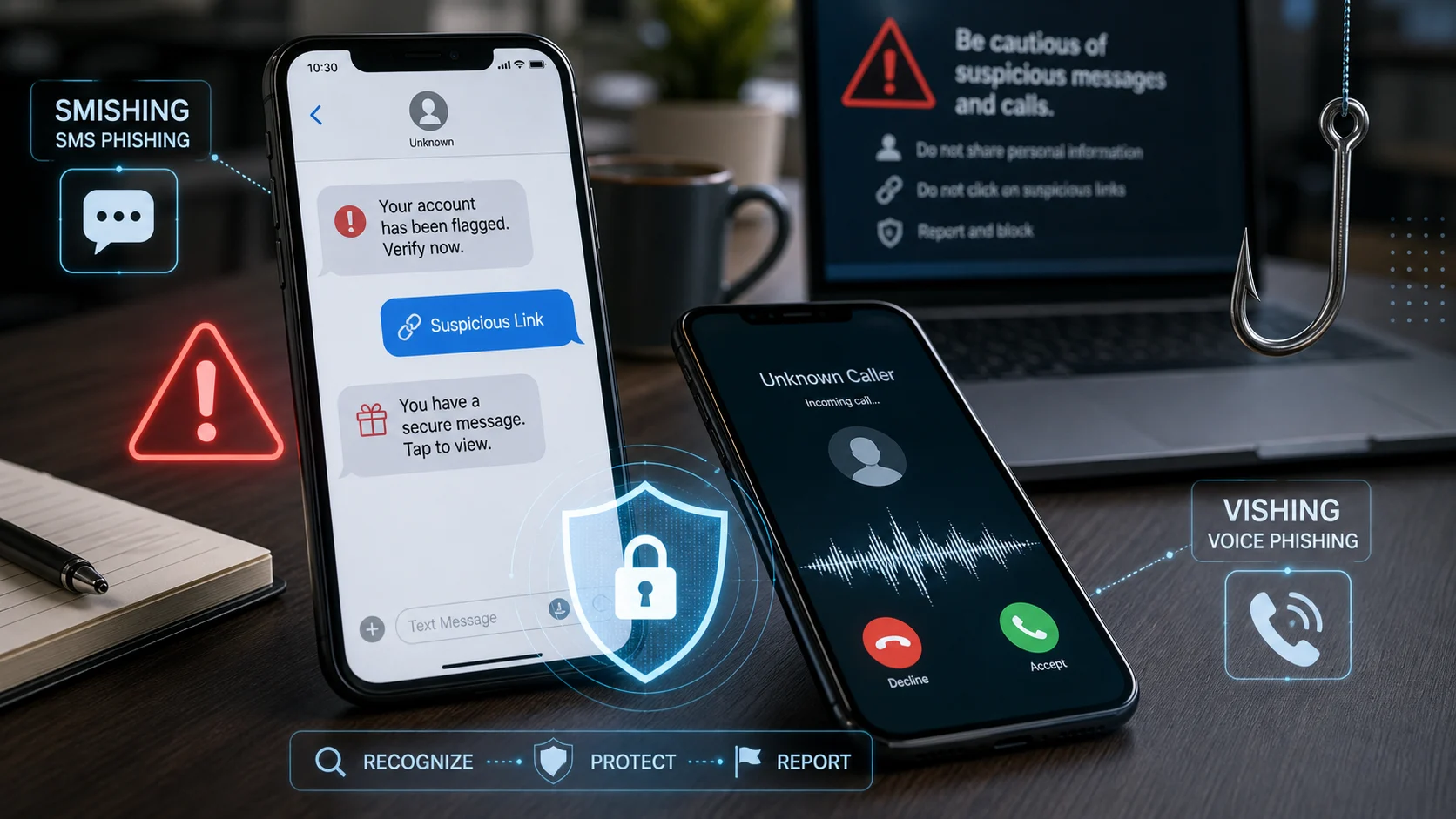

CNN's latest report on AI voice cloning scams highlights a growing fraud risk: criminals can mimic loved ones, spoof caller ID and create panic. Here is what is confirmed and how families and businesses can verify calls safely.
Last checked: June 1, 2026. This article uses CNN's May 29, 2026 report as the primary news source, then cross-checks the safety guidance against FTC consumer advice, FBI/IC3 fraud data, FCC robocall rules and peer-reviewed research on synthetic voice detection.
Quick answer
AI voice cloning scams are phone, voice note or video-call fraud attempts where a criminal uses synthetic audio to sound like someone the victim trusts. The voice may imitate a child, parent, friend, coworker, bank employee, lawyer, police officer, executive or customer support agent.
The practical rule is simple: do not treat a familiar voice as proof of identity. If a caller creates panic, demands secrecy or asks for money, gift cards, cryptocurrency, cash pickup, bank transfers or sensitive information, stop the conversation and verify through a separate trusted channel.
CNN reported on May 29, 2026 that a California mother said she lost thousands of dollars after a call that sounded like her daughter in distress. The case fits a broader pattern regulators have been warning about for years: scammers combine emotional pressure, caller ID spoofing, public social media information and AI-generated voices to make old imposter scams feel more believable.
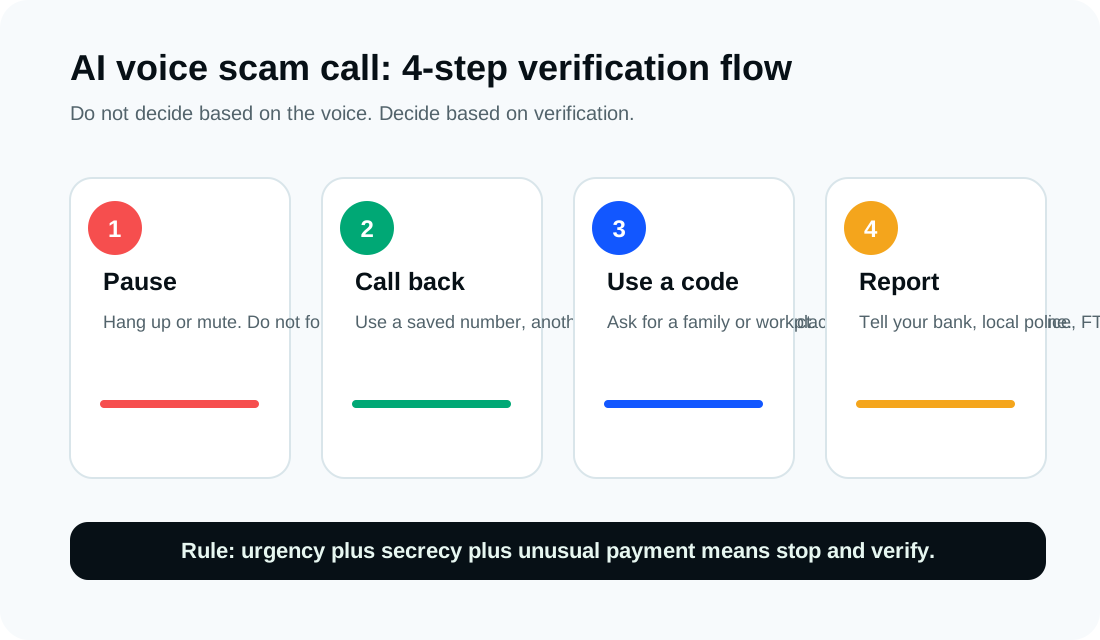
The best defense is not trying to "hear" whether the voice is AI. Detection by ear is unreliable. The better defense is a verification protocol: hang up, call back using a saved number, contact another trusted person, use a family or workplace code word, and never move money while the caller controls the clock.
What is new in the CNN report
CNN's report, published May 29, 2026, focuses on the consumer risk from realistic AI voice replicas. The story describes a recent California case, explains how criminals can build a voice clone from short public audio clips, and emphasizes that people should look for scam behavior rather than relying on audio quality clues.
That distinction matters. Earlier advice often told users to listen for robotic speech, odd pauses or unnatural pronunciation. Those signals are no longer dependable because consumer-grade voice tools have improved and some attackers can use real-time voice conversion during a conversation.
The broader numbers are also significant. The FBI's 2025 IC3 report says complaints involving AI-related information exceeded 22,000 and adjusted losses exceeded $893 million. That total is not limited to voice cloning; it includes several AI-enabled fraud categories such as business email compromise, romance scams, synthetic profiles, deepfake media and phishing. But the report specifically names voice cloning as a tactic in business payment fraud and family distress scams.
| Confirmed point | Why users should care |
|---|---|
| Voice clones can be made from short audio clips | Public videos, reels, podcasts and voicemail recordings can become raw material. |
| Caller ID can be spoofed | A call appearing to come from a known contact is not enough proof. |
| AI-related fraud losses are now tracked by IC3 | Law enforcement is treating AI-enabled fraud as a measurable category. |
| Audio detection is unreliable | The safer approach is callback verification, not guessing whether a voice is fake. |
| Scams often use urgency and secrecy | Panic is part of the attack design, not a reason to obey faster. |
How AI voice cloning scams work
Most voice-cloning scams do not need a Hollywood-level deepfake operation. A criminal only needs three ingredients:
- A believable target story, such as an accident, arrest, kidnapping, medical emergency, lost phone, bank compromise or urgent work payment.
- Enough personal context to make the story fit, often collected from social media, data broker records, public posts, breached data or previous scam calls.
- A voice sample or real-time voice conversion tool that makes the caller sound familiar.
The scam usually follows a pressure script.
First, the victim receives a call or voice message from what appears to be a trusted person or organization. The number may be spoofed to look familiar.
Second, the caller creates an emergency. In family scams, the voice may claim to be injured, arrested or kidnapped. In workplace scams, the voice may sound like an executive authorizing a wire transfer. In banking scams, the voice may claim fraud is already happening and the victim must move money to a "safe" account.
Third, the attacker blocks normal verification. They may say not to hang up, not to call anyone, not to tell the police, not to involve another family member or not to use normal company approval channels.
Fourth, the attacker asks for a payment method that is fast, final or difficult to reverse. Common examples include wire transfers, cryptocurrency, gift cards, payment apps, cash withdrawals, couriers, precious metals, prepaid cards or remote access to a bank account.
Why you should not rely on your ears
The old mental model was: if it sounds like your child, parent, boss or banker, it must be them. AI voice cloning breaks that assumption.
A 2025 Scientific Reports study from UC Berkeley researchers found that human listeners could not consistently identify AI-generated voice clones. In other words, modern synthetic speech can be convincing enough that ordinary listeners should not rely on instinct alone during a stressful call.
That does not mean every suspicious call is definitely AI. It means the user's job has changed. The question is no longer "Does this voice sound real?" The useful question is "Is this request behaving like a scam?"
Use these behavior checks:
| Red flag | Safer response |
|---|---|
| "Do not hang up." | Hang up and call back from a saved number. |
| "Do not tell anyone." | Contact another trusted person immediately. |
| "Send money now." | Refuse until the situation is verified outside the call. |
| "Use gift cards, crypto, wire, cash or courier." | Treat it as high-risk fraud. |
| "The police/bank/doctor/lawyer says you must pay." | Find the official number yourself and verify. |
| "Your caller ID proves it is me." | Caller ID can be spoofed; do not rely on it. |
The 15-minute protection plan
Use this plan before a scam happens. It is faster than trying to improvise during panic.
- Pick a family code word.
Choose a phrase that is not posted online, not a pet name visible on social media, not a birthday, not a school name and not something that could be guessed from public profiles. Share it only with the small group that needs it.
- Set a callback rule.
Agree that any emergency money request must be verified by calling the person back on a saved number or by contacting another trusted family member. If the caller says not to hang up, that is the signal to hang up.
- Make a "no secret payments" rule.
No family member should ever require a secret wire transfer, crypto payment, gift card, cash pickup or courier payment. Real emergencies can survive a short verification pause.
- Reduce public voice samples.
You do not need to delete every video online, but be intentional. Public reels, interviews, podcasts, voice notes and long social videos create more material for impersonation. Parents should be especially cautious about public videos of children.
- Protect voicemail and phone accounts.
Use strong PINs for voicemail and mobile carrier accounts. If a criminal can access voicemail or port a phone number, voice scams become easier to combine with account takeover.
- Save official numbers.
Save numbers for immediate family, school offices, doctors, bank fraud departments and workplace security. During panic, people click or call whatever the scammer provides. A saved contact list reduces that risk.
What to do during a suspicious call
If the call claims a loved one is in danger:
- Say as little as possible.
- Do not confirm names, addresses, schedules or family relationships.
- Hang up, even if the caller says not to.
- Call the person directly using a saved number.
- If they do not answer, contact another family member, friend, school, workplace or local authority.
- Do not send money until the situation is verified outside the call.
If the call claims to be from a bank, government agency or business:
- Do not provide account numbers, one-time codes, passwords or remote access.
- Hang up and call the official number on the back of your card, your statement or the organization's website.
- Do not click links or call numbers from the suspicious message.
- Ask the organization to check for recent logins, transfers, password resets or profile changes.
If the call targets a business:
- Require out-of-band approval for wire transfers, vendor changes and payroll changes.
- Use written approval workflows, not voice-only authorization.
- Require two-person review for urgent payment changes.
- Train finance, HR, executive assistants and customer support teams on voice-clone impersonation.
- Verify unusual requests through known internal channels.
What to do if you already paid
Act quickly. Some payment methods can still be slowed or traced if reported fast.
- Contact your bank, card issuer, wire provider, payment app or crypto exchange immediately.
- Ask whether the payment can be stopped, reversed, recalled or flagged.
- Change passwords on any account you discussed or exposed.
- Save call logs, phone numbers, voicemails, texts, payment receipts, wallet addresses, emails and chat messages.
- Report the scam to the FTC at ReportFraud.ftc.gov and to the FBI's IC3 if it involved cyber-enabled fraud or online communications.
- If there was a threat of kidnapping, violence or immediate physical harm, contact local law enforcement.
Do not pay a "recovery service" that claims it can get the money back for an upfront fee. Recovery scams often target people immediately after the first fraud.
What parents should tell children and older relatives
The safest family message is short:
A voice can be copied. If someone says I am in trouble and asks for money, hang up and call me or another trusted person.
For children:
- Teach them not to share one-time codes, addresses, schedules or family details with unexpected callers.
- Explain that a scary call should be brought to an adult immediately.
- Keep school and emergency contact rules updated.
For older relatives:
- Write the family callback rule on paper near the phone.
- Save trusted numbers in the phone contacts list.
- Make the code word easy to remember but hard to guess.
- Encourage them to call you even if the caller says not to.
What businesses should change
Voice cloning is not only a family scam problem. The FBI's 2025 IC3 report notes AI use in business email compromise and says voice cloning can be used to request wire payments or impersonate employees and executives.
Businesses should update payment controls now:
| Business control | Why it helps |
|---|---|
| Two-person approval for payments | A single cloned voice cannot authorize money movement alone. |
| Callback to known directory numbers | Staff do not rely on caller ID or numbers in messages. |
| Vendor change freeze period | Attackers cannot quickly redirect invoices. |
| Written ticket trail | Emergency voice orders must become auditable requests. |
| Finance-team drills | Employees practice saying no to pressure from "executives." |
Executives should also limit public voice exposure where practical. Public keynotes, podcasts and social videos are part of modern business, but companies should assume that senior leaders' voices are cloneable and design controls around that reality.
Legal and regulatory context
The FCC ruled in 2024 that AI-generated voices in robocalls can fall under the Telephone Consumer Protection Act's restrictions on artificial or prerecorded voices. That helps regulators and state attorneys general pursue illegal robocall campaigns, but it does not stop every one-to-one scam call, messaging-app voice note or international fraud attempt.
The FTC has separately warned consumers that scammers can clone a loved one's voice from short online clips and use it in family emergency scams. The agency's practical advice is to verify the story by contacting the person through a known phone number or another trusted contact.
The policy takeaway is clear: enforcement is improving, but household and workplace verification rules remain the first line of defense.
Bottom line
AI voice cloning makes imposter scams more emotionally convincing, but it does not change the safest response. A real emergency allows verification. A scam depends on panic, secrecy and irreversible payment.
If a familiar voice asks for money or sensitive information, stop. Call back. Verify through another person. Use the code word. Then decide.
Sources
- CNN: AI voice cloning scams are on the rise. Here's how to protect yourself, May 29, 2026.
- CNN Newsource/KESQ syndicated copy of the CNN report, May 29, 2026.
- FBI: Cryptocurrency and AI Scams Bilk Americans of Billions, April 6, 2026.
- FBI IC3 2025 Internet Crime Report.
- FTC: Scammers use AI to enhance their family emergency schemes.
- FTC: How To Avoid Imposter Scams.
- FCC declaratory ruling on AI-generated robocall voices, February 2024.
- Scientific Reports: People are poorly equipped to detect AI-powered voice clones, March 2025.
Before you move on
Consumer scam response. Use this short checklist to turn the article into action.
- Do not reply with OTPs, login codes, or recovery phrases.
- Verify urgent requests through a separate trusted channel.
- Warn contacts quickly if your account may have been used.
This guide is written for practical user safety. For account, platform, or legal decisions, confirm critical steps with the official help center or your service provider.